The post How Weak are Strong Patents: Patent Holdout & Small(er) Technology Firms appeared first on IP Checkups | Patent Categorization Software.
]]>This paper focuses on the prevalence of systematic patent holdout by large tech firms when small(er) technology firms enforce patents against them. In short, large companies prefer to use the slow moving and expensive patent litigation system rather than to take a license or settle with smaller plaintiffs. The use of these tactics to stall the process of having to pay, benefit the large tech company and hurt the smaller plaintiff in several ways outlined in the paper.
The post How Weak are Strong Patents: Patent Holdout & Small(er) Technology Firms appeared first on IP Checkups | Patent Categorization Software.
]]>Patent Analysis: Patent File Wrappers as a Tool for Competitive Intelligence
What is a patent file wrapper? Why is a file wrapper an important source for gathering information to better understand technology, products, and markets? A step-by-step guide on how to review and find key information in a file wrapper.
INTRODUCTION:
Patents contain an incredible amount of valuable technical, legal, and market information*.
Patents have many uses, most Innovators file patents as they believe that the eventual issued patent will provide them with an exclusive right to make, use, or sell any products or services covered by the patent’s claims. This is a common misconception, in reality, the exclusive right of an issued patent entitles the owner to prevent anyone else from making, using, selling, or importing the claimed invention.
People use the information in patents for a variety of reasons. According to Dr. Bowman Heiden, Co-Founder of the Center of Intellectual Property in Gothenburg Sweden patents and have two main use cases:
- As a control mechanism to mitigate market risks (or seize market opportunities) associated with making, using, or selling products.
- To gather competitive intelligence on technology, products, and markets (it has been documented that much of the information published in patents is not available anywhere else).
Patent attorneys that draft and prosecute patent applications look at patents through a legal lens focusing on the legal and technical arguments which define the novel features of a patented invention.
R&D, corporate development, marketing, and investment analysts look at patents primarily as a means to gather competitive intelligence. Specifically, patent information provides insight into the who, what, when, where and how of technology, product development, and market trends. Analyzing the technology or patent landscape in context of other similar innovations provides a valuable way to gain unique insight into the R&D and business development activities of market competitors.
One aspect of the patent application process that often gets overlooked by non-patent attorneys are file wrappers, also known as file histories. A patent’s file wrapper documents all of the communication (between the patent applicant and the patent examiner) related to the process of applying for and the eventual allowance, rejection, or abandonment of a patent application.
File wrappers provide details into how a technology is distinguished from other technologies. The information in the file wrapper offers insight into the technical limitations that define the scope the invention disclosed in the patent application.
While the patent application describes the specific technology from the inventor’s perspective, file wrappers provide context from the patent examiner’s point of view. File wrappers disclose the arguments that were made between the patent applicant and the patent examiner which either result in a government issued right to exclude others, or a rejection.
The following article aims to provide non-patent experts with a high-level overview of what a file wrapper is, and why it is useful to understand what makes a patented technology unique. We include a step-by-step guide for a non-patent-expert of how to find and review key information in a file wrapper of a United States patent.
*A patent provides important information to understand the disclosed technology, related products, and markets. Patents also provide insight into who is developing the technology and what products the technology might enable. By tracking patent publications in aggregate over time, it is possible to get a sense of how a market is evolving.
BACKGROUND: WHAT IS THE DIFFERENCE BETWEEN A PATENT & A FILE WRAPPER?
One of the main features of a patent application is for the inventor to disclose information on how a new technical innovation works. Typically, in the United States, the non-provisional patent application (“patent application”) publishes at around 18 months from when the patent application was initially filed. This publication is in essence a trade-off for the patent applicant to potentially receive 20 years of exclusivity if the patent issues. If the patent does not issue, the patent application becomes prior art for future patent applications.
If, through the examination process, the patent is determined to be novel, non-obvious, and useful, the patent application becomes an issued patent.
That examination process, the detailed discussion between the patent applicant and the patent office examiner is what resides in the patent’s file wrapper. A file wrapper, alternatively referred to as a file history or a prosecution history is associated with each published patent application, whether it issues or not. After 18 months from filing the initial patent application, the patent’s file wrapper also becomes available to the public. The file wrapper contains many details related to the patent application process beyond what is published in the patent application. Importantly, the file wrapper includes the specific arguments made between the applicant and examiner which ultimately result in the patent issuing or being rejected/abandoned.
Sometimes, the patent applicant explains in the patent application why she thinks the disclosed technology is unique in light of prior art, however this is a biased view. The review by the patent examiner, available only in the file wrapper, offers a third party, unbiased perspective.
The file wrapper provides context as to what specifically makes the patented technology unique.
ARGUMENTS BETWEEN APPLICANT AND EXAMINER: WHAT IS THE PATENT FILE WRAPPER PROCESS?
In order for a patent application to be issued or rejected, it must be reviewed by the government funded patent office in each jurisdiction in which the rights outlined in the patent are to be issued.
The issuance or rejection of the patent application often depends on the examiner’s interpretation of the prior art in light of the claims being pursued by the patent applicant. This is described as patentability. The process begins when the applicant submits a patent application to a patent office. The patent examiner then reviews the patent application in light of prior published patents or scientific literature (prior art) either submitted by the applicant and/or identified through the examiner’s own prior art searches.
The patent application’s issuance or rejection often stems from the examiner’s review of the prior art** and her determination as to whether the claims applied for in the patent application are novel, non-obvious, and useful (conditions of patentability) in light of the prior art. The examiner must determine whether the claims submitted in the patent application overcome the technical features disclosed in the prior art.
If rejected, the applicant may narrow, or limit the scope of the submitted claims in order to satisfy the examiner’s arguments and overcome her rejection.
This process can continue through multiple office actions and requests for continued examination until the patent application is either allowed (issued) by the patent office or abandoned by the patent applicant.
If the applicant is unable to overcome the prior art objection raised by the examiner, the patent application will not issue and typically becomes abandoned. The abandoned patent application will eventually publish and become prior art for future patent applications. This is the most common outcome of a patent application.
This back-and-forth correspondence between the patent applicant and the patent examiner is referred to as the patent prosecution.
** There are other aspects of the examination process which can impact a patent’s issuance or rejection, see below for more information on the different types of rejections.
OTHER INFORMATION PROVIDED IN A PATENT’S FILE WRAPPER & FILE WRAPPER USE CASES:
The moment that the patent applicant files a provisional application with the United States Patent and Trademark Office (USPTO), the file wrapper is created. At that point and going forward, all correspondence related to that particular patent application is captured in the file wrapper.
In the United States, the information in the file wrapper is available to the applicant through the Private Patent Application Information Retrieval (PAIR) system referred to as Private PAIR. This is supported by the United States Patent and Trademark Office (USPTO). If the provisional application is converted into a non-provisional patent application, the patent application will eventually publish at which point the document is available through Patent Center to any party that wishes to view it. The Patent Center system is also made available by the USPTO. It replaces Public PAIR which was retired on July 31, 2022.
In addition to the arguments between the applicant and the patent examiner related to patentability, the file wrapper contains a ledger of all of the administrative details that occur between the patent applicant and the patent office. Many of the documents in the file wrapper confer aspects of the invention’s legal status and include items such as inventor declarations, examiner search strategy, prior art references etc.
The information contained in the file wrapper is essential for anyone that wishes to get a comprehensive and contextual understanding of the technology disclosed in a patent application. Analyzing this information in light of other related patents is essential to understand the larger competitive patent landscape related to the technology disclosed in the patent application.
Patent attorneys use file wrappers to understand the legal limitations of an invention and the arguments included in the office action serve as ammunition for making legal arguments in patent litigation, inter-partes reviews, and opposition proceedings.
The arguments made in file wrappers can also be used for business negotiations to define the scope of a licensing agreement or assist in setting the valuation related to an investment round, a buyout, a merger, or an acquisition.
From a competitive intelligence point of view, documents contained in the file wrapper such as cited prior art, applicant amendments and remarks, examiner’s search strategy, rejections (non-final and final), notes from applicant/examiner interviews, and notices of allowance (if the application is issued) are all essential to understand the details related to technology that’s been disclosed in the patent application, and why it is or isn’t considered unique in the eyes of the patent office.
Scientists, technical experts, corporate development executives, licensing experts, and investors can use file wrappers to understand what makes the technology unique (or not) in light of the patent examiner’s review.
File wrappers include critical reading material (not published anywhere else) for anyone interested in gaining a deeper understanding the technology disclosed in the patent and the related patent landscape.
A STEP-BY-STEP GUIDE TO FIND AND REVIEW A FILE WRAPPER:
Below is a brief guide (including an example related to U.S. Patent No. 9,305,280B1 of how a non-patent expert can dig in and identify important details in a file wrapper to better understand what makes the technology unique. Reviewing file wrappers is useful when performing technology or patent landscape analysis as it provides important context and insight into the technology and related products/market that cannot be found anywhere else.
Step 1:
Visit the United States Patent Office’s (USPTO), publicly available Patent Center website: https://patentcenter.uspto.gov/
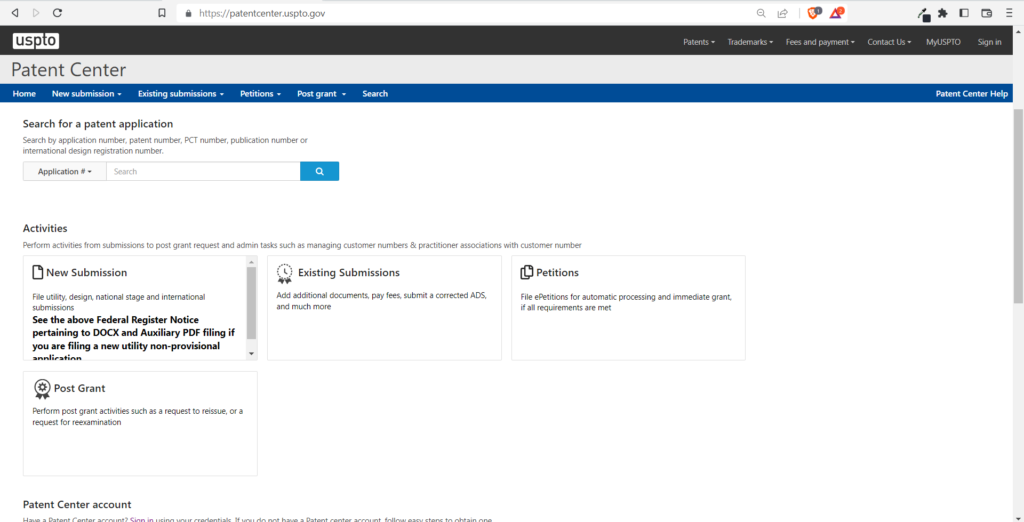
Figure 1: USPTO’s Patent Center Website
Step 2:
Select ‘Patent Number’ field (rather than the default selected, ‘Application Number’ – this is what one would used to look up a pending patent application number), from the drop down. Type ‘9305280’ in the ‘Search’ box and click the ‘SEARCH’ button. This corresponds with U.S. Patent No. 9,205,380 assigned to Amazon Technologies Inc. entitled, “Airborne fulfillment center utilizing unmanned aerial vehicles for item delivery”.
The next page will look like this:
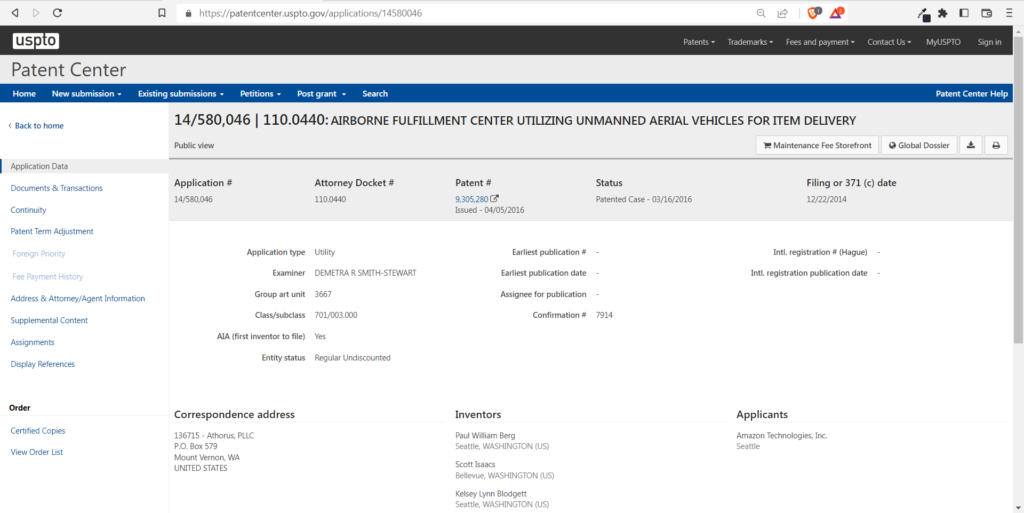
Figure 2. Patent Center, Application Data page for U.S. Patent No. 9,205,380
This page displays some of the key bibliographic information related to the patent. This includes data such as, ‘Inventors’, ‘Applicants’, and ‘Correspondence address’. One can find additional information here as well.
Step 3:
Next, click on the tab on the left side of the screen entitled ‘Documents & Transactions’. See the image below. The ‘Documents & Transactions’ tab is outlined in gray:
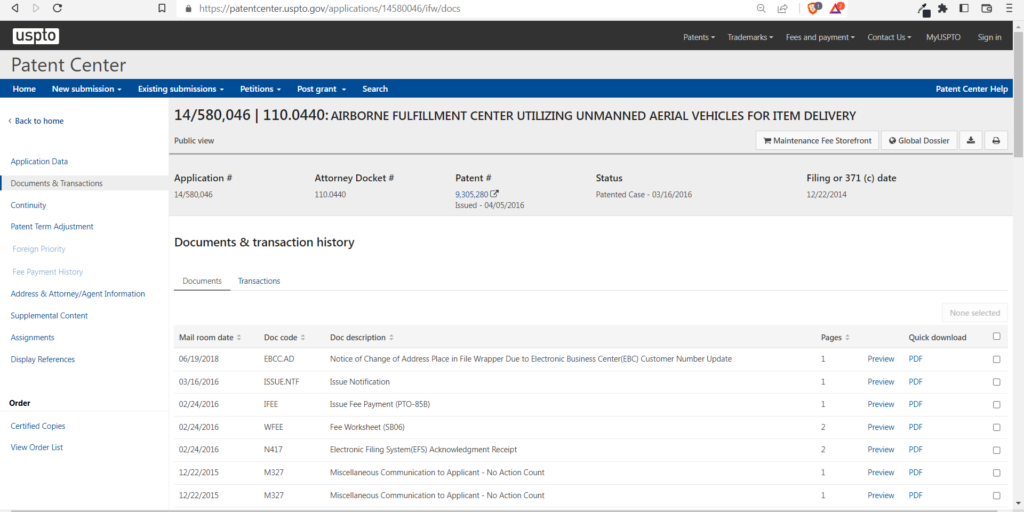
Figure 3. Patent Center, Documents & Transactions tab for U.S. Patent No. 9,205,380.
This tab displays the entire history of documents associated with this file wrapper. The most recent correspondence was from 06-19-2018 (at the top of the list) reflects a change in the applicant’s address highlighted.
Many of the documents available in the file wrapper can be downloaded by simply selecting the check box to the right of an item and clicking on the corresponding blue ‘PDF’ link associated with each document.
Step 4:
As one continues to review the file wrapper ledger, scroll down the page, one will see an entry from 04-01-2015 entitled ‘Non-Final Rejection’ (highlighted in blue). See Figure 4 below.
This is the entry in the ledger is an examiner’s non-final rejection document which provides details from the examiner of why he or she rejected the application.
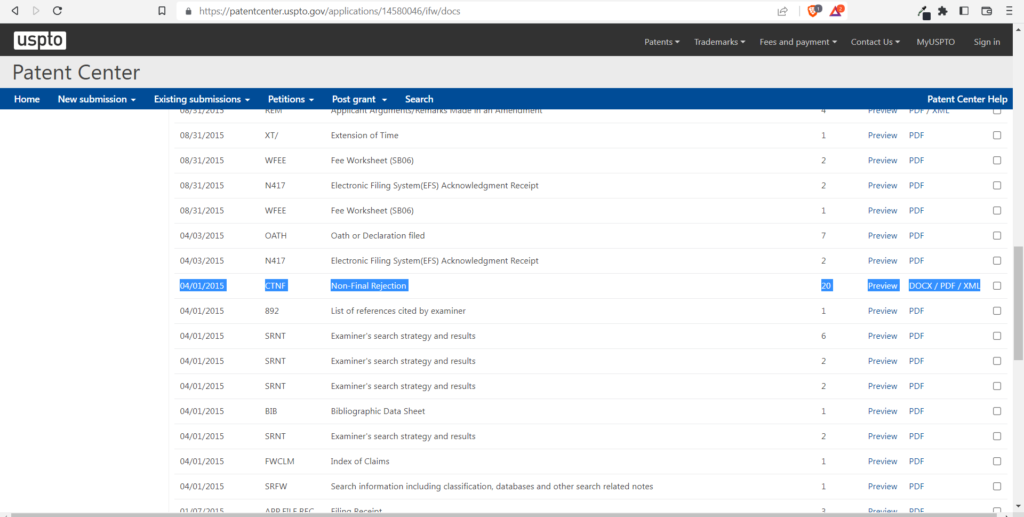
Figure 4. Patent Center, Application Data page for U.S. Patent No. 9,205,380, the File Wrapper Ledger- Non-Final Rejection.
The most common types of examiner rejections are described in U.S. Title Code 35 of the United States Code (35 U.S.C.), section 101 (unpatentable subject matter), section 102 (novelty – anticipation, citing of a single reference), section 103 (obviousness, citing of two or more references), and section 112 (errors in the written description such as indefiniteness – lack of claim language or unclear claim language in the written description). One can learn more about the different types of rejections here.
Step 5:
Click on the “Non-Final Rejection” blue hyperlink, a 20-page PDF document will open in the browser. This document contains details into the argument made by the examiner, Demetra Smith Stuart, as to why they issued a non-final rejection.
Scrolling to page three of the document (see Figure 5 below), highlighted in yellow below, that claims 1-13 and claims 15-20 were “rejected under 35 U.S.C. 102(a)(1) and 35 U.S.C 102(a)(2) as being anticipated by U.S. Published Patent No. 20140032034 to Raptopolous et al. hereafter, “Raptopolous”.
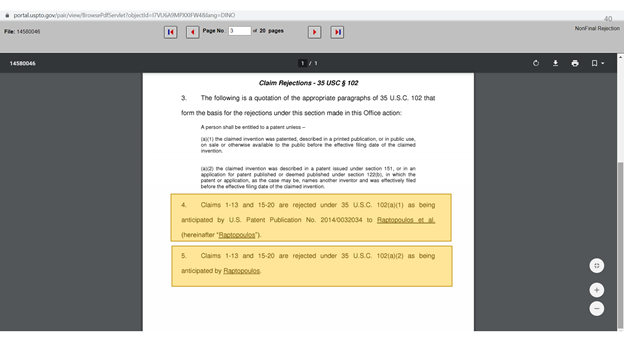
Figure 5. Patent Center, for U.S. Patent No. 9,205,380, Non-Final Rejection, Page 3.
The “Raptopoulos” published patent application was eventually allowed by an examiner and became U.S. Patent No. U.S. 9,384,668 (‘668) entitled, Transportation using network of unmanned aerial vehicles’. The patent appears to be assigned to Singularity University. Eventually this patent was likely licensed to MatterNet, a start-up founded by Raptopoulos in 2012.
By digging deeper into the ‘668 patent one would find additional insight into whether prior art was cited against it during its prosecution and if so what art, what arguments were made, etc. This is an iterative process that can feel overwhelming once one understands how much information is available to analyze. Conversely, it is very empowering to have access to so much information. Especially when making multi-million or billion-dollar investment decisions.
On another note, each examiner has a unique perspective, software developers and patent analysts have taken advantage of this publicly available file wrapper data to create profiles of each examiner. Patentbots.com enables one to drill deeper into examiner statistics around allowance, number of office actions, etc. See statistics for Demetra Smith Stuart here.
Step 6:
A deeper dive into the non-final rejection document reveals, for example on page 4, the specific arguments the examiner made, (see Figure 6).
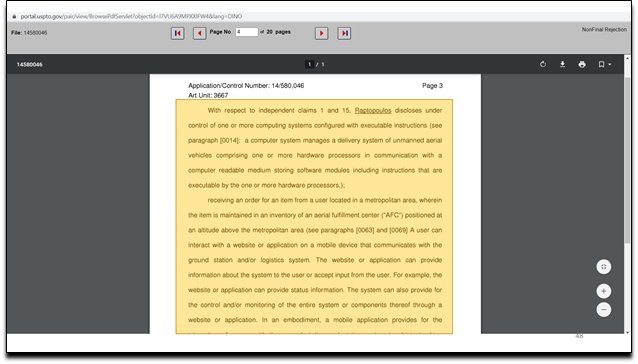
Figure 6. Patent Center, for U.S. Patent No. 9,205,380, Non-Final Rejection, Page 4.
Here is some of the text from the non-final rejection. The bold words are from the original filed claim from Amazon U.S. 9,305,280 (‘280) and the italicized words come from U.S. Patent Publication No. 20140032034 (Raptopoulos).
“With respect to independent claims 1 and 15, Raptpoulos discloses under control of one or more computing systems configured with executable instructions (see paragraph [0014]: a computer system manages a delivery system of unmanned aerial vehicles comprising one or more hardware processors in communication with a computer readable medium storing software modules including instructions that are executable by the one or more hardware processors,); receiving an order for an item from a user located in a metropolitan area, wherein the item is maintained in an inventory of an aerial fulfillment center (“AFC”) positioned at an altitude above the metropolitan area (see paragraphs [0063] and [0069] A user can interact with a website or application on a mobile device that communicates with the ground station and/or logistics system. The website or application can provide information about the system to the user or accept input from the user. For example, the website or application can provide status information. The system can also provide for the control and/or monitoring of the entire system or components thereof through a website or application. In an embodiment, a mobile application provides for the interaction of a user with the ground station or logistics system to obtain tracking information about a package. Such a mobile application can also allow the user to schedule a package drop off or locate a suitable ground station, for example, through identification of a current location or a desired location. The UAV can be designed to fly at altitudes of up to 10,000 feet, and be optimized to fly at lower altitudes, such as 1,000 feet. The UAVs can operate in segregated airspace, generally below an altitude of 400 ft and not near airports or helipads.);
The examiner arguments continue on for a couple more pages in the non-final rejection document and exemplify how each element of filed claims, 1 and 15 of the ‘280 patent application are present in the Raptopoulos reference. This is important as it details what limitations are in Raptopoulos, that Amazon is unable to claim as its own. Or, Stated another way, what elements can Raptopoulos control that Amazon can’t?
Here is a full copy of U.S. Patent No. 9,205,380’s Filewrapper – Also known as, Application No. 13776362
Step 7:
Going back to the file wrapper ledger, see an entry from 08-31-2015 which contains “Applicant Arguments/Remarks made in an Amendment” (highlighted in blue in the figure below).
This document contains the arguments made by the applicant in response to the examiner’s non-final rejection.
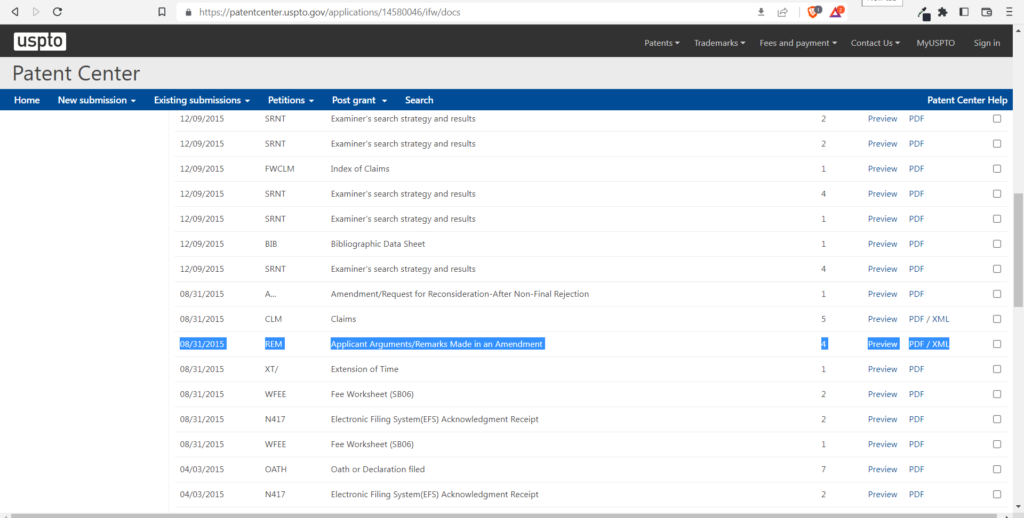
Figure 7. Patent Center, Application Data page for U.S. Patent No. 9,205,380, the File Wrapper Ledger- Applicant Arguments-Remarks made in an Amendment.
In this document (see Figure 9 below), one can see the “Summary of an Applicant-Initiated Interview”. The document states:
“During the interview, the reference, Raptopoulos, and the proposed amendments were discussed and agreement was reached that the proposed amendments to claims 1, 6, and 15 overcame the cited reference”.
Thus, through an interview, the applicant was able to overcome the examiner arguments. Although we don’t have the transcript of exactly what was said, we can access the amended claims later in the file wrapper.
This was clearly an interview proposed by the applicant in response to the examiner’s non-final rejection. Some patent attorneys/agents prefer to file broad claims with a patent application and then after receiving a non-final rejection from the examiner, they request an examiner interview. This strategy enables a savvy applicant to discuss the matter verbally without putting any of the details in writing (subsequently ending up in the file history). The filewrapper provides a written history of the back and forth of the patent application process. Including discussions related to patentability, prior art, and arguments of why or why not a patent should grant. This written material can create issues for an applicant in the future. Especially if the patent is the subject of a patent litigation.
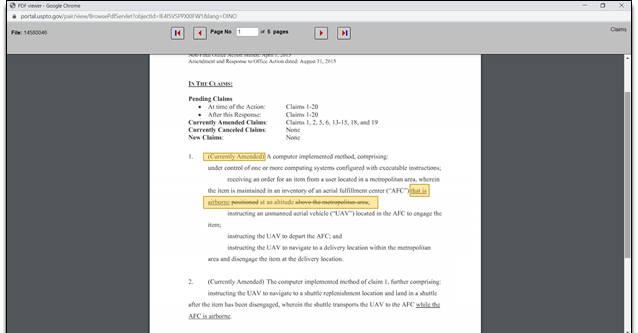
Figure 8. Patent Center, Application Data page for U.S. Patent No. 9,205,380, Amended Claim 1.
Step 8:
The screenshot below from the file wrapper displays the amended claims which were ultimately allowed. By simply removing a few words and adding a few others, the examiner was satisfied that the applicant traversed the cited prior art with respect to claim 1, see Figure 9 below.
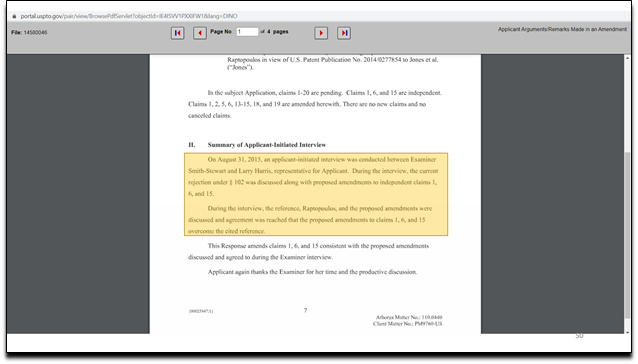
Figure 9. Patent Center, Application Data page for U.S. Patent No. 9,205,380, Summary of Applicant-Initiated Interview.
CONCLUSION:
This is a real-life, yet simplified example of how the examination process works between applicant and examiner. There are often several “office actions” that occur between the applicant and the patent examiner. A common sequence includes a non-final examiner rejection, an applicant amendment, a final rejection by the examiner, and then an applicant request for continued examination (RCE) is filed to continue the process.
All along, the file wrapper captures the communications between applicant and examiner. The underlying goal of the process is for the applicant to clarify the invention and exemplify how it is novel, non-obvious, and useful in light of the prior art.
Many times, patents are abandoned before they are allowed. This can occur for a variety of reasons including the possibility that there isn’t a patentable invention to allow, or in many cases, applicants become exhausted, or don’t believe it is worth continuing to spend money and time arguing with the patent examiner to get their invention issued.
An additional point to consider is the fact that examiners have a limited amount of time to search for prior art. Therefore, it is possible (and likely) that a patent issues in light of the prior art cited by the examiner, but additional published prior art exists that wasn’t discovered by the examiner that could ultimately “invalidate” a patent’s claims. In instances where patents are licensed or litigated, licensees and defendants are willing to scorch the earth to identify prior art that wasn’t cited in the file wrapper but was published prior to the patent application’s filing date. This enables accused infringers to invalidate the patent being asserted against them or potential licensees to avoid having to take a license.
In the end, the patent process is complex, and although reading a patent is essential to begin to understand the technology disclosed, it is critical to read the file wrapper to get the full picture of how the technology is unique in the context of other innovations. While patent attorneys and other patent experts use file wrappers as a tool to understand the specific ‘legal’ limitations of the patented technology in light of the prior art; non-patent experts can derive important technical clues as to a technology’s unique (or not so unique) features which can impact business and/or R&D strategy. Reading file wrappers offers insight into how the boundaries of a patent’s claims are shaped and what elements of a technology its owner can control.
Understanding these issues is critical for enterprises. The benefits of this information intersects with a variety of disciplines. Engineers, scientists, business executives, marketers and patent attorneys benefit from studying the publicly available information contained in a patent’s file wrapper not only for intellectual property decision making, but also to drive decisions related to R&D initiatives, licensing, M&A and other corporate strategies.
EPILOGUE: ADDITIONAL INFORMATION RELATED TO PATENT FILE WRAPPERS
Here are some additional points to consider regarding file wrappers:
- Patent applications can be filed and prosecuted by:
- Inventors that represent themselves during the patent prosecution process.
- Patent agents that represent the applicant(s).
- Patent attorneys that represent the applicant(s).
- Patent examiners must have technical expertise, and they must go through rigorous training to become a patent examiner. However, patent examiners do not have to be attorneys or patent agents in order to be a patent examiner. This is interesting and also obviates the importance of technical experts reviewing patent applications and file wrapper.
- Patent examiner’s work is guided by an Examination Time and Production system. Examiners work on an incentive a points system. Each task results in a different number of points which are aimed at producing an efficient patent examination corps.
- The current backlog of unexamined patent applications is over 625,000. Additional statistics including traditional pendency time, time to first office action and other data can be found at the USPTO dashboard for patents.
- Examiner/Applicant interviews are often conducted and although notes from those telephone or (pre-COVID) in-person interviews are sometimes uploaded to the file wrapper, audio or video recordings of those conversations are not included in the file wrapper.
- The information found in the file wrapper is often discussed when during patent litigation. The file wrapper provides a written history of the patent application process which can last several years or more detailing the process of getting a patent issued. Legal counsel from both sides (plaintiff and defendant) uses the back-and-forth discussion between applicant and examiner as a resource to confer or refute aspects of the technology. This sometimes occurs years after those discussions in the file wrapper took place. Savvy patent drafters and prosecutors understand this and often let it be a guide to how they respond to or do not respond to office actions and other examiner correspondence.
The post PATENT ANALYSIS 2023: PATENT FILE WRAPPERS AS A TOOL FOR COMPETITIVE INTELLIGENCE appeared first on IP Checkups | Patent Categorization Software.
]]>The post PatentCAM – Frequently Asked Questions appeared first on IP Checkups | Patent Categorization Software.
]]>Our recent webinar, Beyond the spreadsheet – Powerful tools to manage patent information and scientific literature elicited a lot of interest and questions related to our PatentCAM software platform.
Over the next several weeks, we will post answers to those frequently asked questions here, starting below with our response to the first question, “How does capturing written comments in PatentCAM avoid legal issues related to discovery?”
As a quick background, our web-based platform, PatentCAM, is a simple, centralized repository for categorizing, archiving, and monitoring patents and non-patent literature.
It features a simple user interface and is easier to use than other more complicated patent management platforms on the market.
PatentCAM provides a secure, shared repository for R&D, legal, and other corporate stakeholders, to manage, annotate, and maintain patent information related to your organization’s technical areas of interest. Customized for patent and technical information professionals, PatentCAM replaces generalized spreadsheets used by many organizations in managing this highly valuable information.
______________________________________________________________________________________________________________
PatentCAM – Frequently Asked Questions #2:
How are patents imported into PatentCAM?
Some of our customers subscribe to commercially available patent search tools, while others use publicly available sources. PatentCAM enables users to import patent numbers from any commercial or free database platform to categorize, analyze, and monitor only the patents that are pertinent to your company or project.
Some of the more well-known search tools include Patbase (Minesoft), Orbit (Questel), Innography (CPA Global), TotalPatentOne (Lexis Nexis), Scifinder (Chemical Abstracts Society), USPTO (US Patent and Trademark Office), Espacenet (European Patent Office), Patentscope (World Intellectual Property Office), The Lens, Google Patents among others.
Basically, any tool that provides a patent publication number will work. Simply paste the patent number(s) into the import dialogue and PatentCAM will fetch the bibliographic information, full text, family data and more.
The import feature can also handle Digital Object Identifier (DOI) numbers for non-patent literature. And, for scientific literature or publications without a DOI, you can manually insert the title, abstract, dates, a link, and other bibliographic information. You can also upload a PDF of the reference to store it along with the bibliographic information.
______________________________________________________________________________________________________________
PatentCAM – Frequently Asked Questions #1:
How does capturing written comments from technical experts in PatentCAM avoid legal issues related to discovery?
There are a whole host of legal opinions and guidance from lawyers on what information qualifies as attorney-client privileged (we have provided some in-depth resources below if you are interested in reading further).
This is an important question because the information that becomes discoverable from your patent research can have a major impact on the outcome of the case.
We will leave it to the attorneys to opine on whether or not certain technical information or communications about that information is or is not protected in discovery through attorney-client privilege. From a lawyer’s perspective, the answer is likely “It depends”.
Some organizations take the legal issues associated with technical experts reviewing patents to an extreme. They believe that no information related to patents should be written down – all information should be communicated orally. This, in our view, is impractical and not very useful to the organization.
Others have gone as far as to instruct R&D teams NOT to search for patents thereby promoting a policy of willful blindness. In one case, this policy backfired when the plaintiff’s allegations of willful blindness were sufficient to defeat the defendant’s attempt to dismiss the claim of willful infringement. The judge ruled that “A well-pled claim for willful blindness is sufficient to state a claim for willful infringement.”
Our view at IP Checkups (we aren’t lawyers), is that ALL technical information may be discoverable in the context of patent litigation.
Therefore, we promote the use of PatentCAM™ as a technology which supports an internal process to form the basis of internal corporate policy, with the following rules:
- All competitive patent and non-patent literature information is stored in a central, searchable repository – i.e. PatentCAM.
- All patent information resulting from patent searches or patent review is uploaded and stored in the PatentCAM platform.
- All emailed communications, comments, rankings, or other metadata related to the patents are stored in PatentCAM.
- Downloading or reviewing patents from any other source or in any other format is considered “rogue” behavior and is not allowed by the corporation.
- Technical experts and R&D staff are encouraged to read others’ patents to learn or familiarize themselves with any useful technical disclosure in the patent.
- Feel free to add comments, however, do not add or email any written subjective or descriptive comments other than language that is quoted verbatim from the patent.
- Do not let your interpretation of the document affect your current or upcoming research or work activity.
- Attorneys or legal staff must review all comments left by technical experts.
Implementing PatentCAM not only reduces costs associated with discovery and litigation – it also creates the advantage of systematically enabling technical experts to review competitor patents safely, with attorney oversight.
It also provides defensible arguments to a judge or jury in the context of patent litigation by showing:
- The corporation has a proactive and systematized process, technology, and policy around analyzing and reviewing competitors’ patents.
- Potentially relevant patents are reviewed and marked by technical experts and then reviewed a second time by attorneys.
- Review of the information by legal counsel to vet whether a freedom to operate opinion is necessary.
Not only can organizations show they have implemented a best practice, but they can also avoid the typical problems that occur in a spreadsheet paradigm. Namely, challenges associated with disparate information spread across the corporation by emails and other correspondence that is not regularly reviewed by attorneys and may contain problematic comments.
Here are links to older published guidance from reputable law firms and the American Bar Association (ABA).:
https://www.sgrlaw.com/ttl-articles/916/
https://www.oblon.com/publications/attorney-client-privilege-and-work-product-immunity-in-patent-litigation
https://www.americanbar.org/groups/business_law/publications/blt/2013/10/01_unger/
https://www.finnegan.com/en/insights/articles/the-attorney-client-privilege-and-attorney-work-product-doctrine-may-prevent-an-adverse-party-from-obtaining-documents.html
Do you have additional questions that you would like us to answer? Contact us.
The post PatentCAM – Frequently Asked Questions appeared first on IP Checkups | Patent Categorization Software.
]]>The post The future of Information Management – Inter-disciplinary knowledge management + software tools appeared first on IP Checkups | Patent Categorization Software.
]]>The direction patent research is heading in is a topic on the minds of most information professionals. Or at least it should be.
The combination of knowledge process outsourcing, new artificial intelligence (AI) and machine learning tools, along with the expansion of self-service research at large corporations, requires information professionals to rethink their roles and consider how the future will impact their jobs.
Vashe Kanesarajah, Head of Strategic Development in the IP Group at Clarivate Analytics recently published an interesting white paper on the future of patent research. Kanesarajah outlines five essential attributes that will shape the role of corporate information departments in the future:
- Data translation Making sense of the complex legal and technical jargon embedded in patents and scientific literature.
- Virtual Capabilities Identifying, selecting and building relationships with external partners to add intelligence and eliminate coverage gaps.
- Center of Excellence (COE) Creating and leading efforts to promote interdisciplinary working groups and project management across the enterprise.
- Embracing AI and Data Science Utilizing emerging technologies for modern corporations to gain efficiency.
- Corporate Integration Making corporate leaders aware of the information derived from patents and scientific literature, and using it to make informed business, legal and R&D decisions.
To successfully implement these attributes, companies must move away from the traditional siloed departments (legal, marketing, corporate development, R&D), and create a much more collaborative environment, connecting people and ideas across the enterprise. This encourages cross-functional communication and establishes interdisciplinary project management, turning vast amounts of data into actionable results.
At IP Checkups, we’ve been promoting this cross disciplinary information management approach since we founded the company in 2004 and even before that through Irving Rappaport’s work at Smart Patents and Aurigin Systems in the early 1990s.
To implement cross-disciplinary information management systems at the enterprise level requires two key components:
- A trained workforce that understands the nuances involved with strategy and communications at the intersection of business, law, and technology.
- A software platform and supporting processes to capture, manage, and distribute institutional knowledge across the enterprise.
The best way to train people as stated in point 1, is through academic programs such as the Center for Intellectual Property (CIP) in Gothenburg, Sweden. This 2-year graduate program and associated executive education curriculum focuses on the strategic management of Intellectual assets. The curriculum applies a cross-disciplinary approach (business, law, and technology) to solve complex problems in the knowledge economy. Upon graduation from this program, CIP students are prepared to manage and implement all five attributes outlined in Kanesarajah’s paper.
As for software and processes (point 2 listed above), IP Checkups has developed a software platform, PatentCAM™ backed by our proven patent landscape analysis process to organize and manage competitive patent and technical information. The combination of our software and processes create policies within the enterprise, that reinforce cross-disciplinary practices while establishing a centralized knowledge repository that turns disparate information into informed decision making.
Knowledge process outsourcing, powerful machine learning tools and self-service research are having a profound impact on corporate information departments. In order to keep up with these developments, corporate information professionals must be trained across disciplines (business, law, technology). A trained workforce along with our software and processes can drive new business, IP protection and innovation opportunities.
As a quick update to this post, check out the excellent webinar elaborating on Vashe Kanesarajah’s excellent article. The webinar is sponsored by Derwent and hosted by IP Watchdog. The topic is Modern Patent Research: Capitalizing on Information Across Your Organization. You can check it out here. Featuring moderator Gene Quinn, along with IP Management experts Benoit Sollie, Debra Bannville, and Vasheharan Kanesarajah,
Interested in learning more? Contact us.
The post The future of Information Management – Inter-disciplinary knowledge management + software tools appeared first on IP Checkups | Patent Categorization Software.
]]>The post Beyond the spreadsheet – Powerful tools to manage patents and non-patent literature appeared first on IP Checkups | Patent Categorization Software.
]]>To view the entire webinar, see the video embedded at the bottom of this post.
Reviewing, organizing, and managing large amounts of information contained in patents and scientific literature is extremely challenging. Whether working in research, on new product development, or competitor monitoring, it is essential to systematize the patent search and analysis process to derive as much value as possible from the vast amounts of data collected.
The presentation highlights our IP management software, PatentCAM to manage patents and non-patent literature. It also includes a case study for a project related to Algae Biofuels. We describe the patent landscape analysis process, how to categorize, annotate and manage the information, and how doing so can reduce redundant research efforts, generate new revenue opportunities and accelerate the path to commercialization in any technology area.
The webinar touched on a variety of topics:
- Learn how to use patents to gain insights into competitor activities.
- Discover how organized patent information can drive decisions related to new innovations, R&D, and product development initiatives.
- Gain insight into how patent analysis increases revenue generation opportunities while reducing:
- Redundant research
- Patent litigation risks
- Time to commercialization
Ultimately, the webinar teaches you how to turn patent and non-patent literature search results into actionable business decisions.
Click here to access a copy of the slide presentation.
To schedule a demo of PatentCAM, contact us.
The post Beyond the spreadsheet – Powerful tools to manage patents and non-patent literature appeared first on IP Checkups | Patent Categorization Software.
]]>The post Corporate Legal Operations – Implementing IP best practices to drive your organization appeared first on IP Checkups | Patent Categorization Software.
]]>Due to the nature of how corporations are organized, typically into silos (legal, corporate development, and R&D), knowledge management and cross-disciplinary information sharing, is an area in which many companies can improve.
Since its inception, IP Checkups has embraced the idea that the best way for corporations to reach their maximum potential is to share information across disciplines. This involves creating processes, supported by software and policies to manage and distribute critical data related to patent landscapes, competitive intelligence, market analysis and new innovations. Many of the methods used to derive this data are, by nature, overlapping and complimentary. Connecting people, ideas and data across IP, R&D, marketing and corporate development teams is an ideal way to turn disparate information into institutional knowledge enabling the organization to make informed, actionable and strategic decisions. Organizing, managing and sharing inter-disciplinary information results in:
- Informed R&D and M&A decisions
- Reduction of redundant research
- Speeding time to commercialization
- New revenue opportunities
Over the past several years, the role of the corporate legal operations professional has emerged to manage this information and connect people within the organization across-disciplines.
Legal software and service providers like IP Checkups have also emerged that support the gathering, sharing, and analysis of corporate knowledge. We developed PatentCAM™, a collaboration software platform to manage the results of patent searches and landscape analysis in a centralized, secure repository to collaborate across disciplines.
Although IP Checkups has been promoting the benefits of interdisciplinary knowledge management since 2004, until recently, there have been few organizations focused on establishing and publishing best practices and standards of operation related to managing corporate IP operations.
In 2019, the Corporate Legal Operations Consortium (CLOC) published resources defining best practices necessary to successfully manage operations, as it relates to an organization’s intellectual property.
The IP proficiency section of the CLOC website includes several resources and tools including IP proficiency matrices for in-house IP departments to assess their progress in meeting standards defined by industry, law firms, and consulting firms. There are three IP proficiency matrices available — one for patents, one for trademarks and one for litigation.
CLOC organized the IP proficiency matrices into the following categories:
- People
- Process
- Technology
- Policies
- Third Party Support
- Enforcement/Monetization
For each area there are several categories, divided into an evolving continuum of four assessment classifications:
Developing –> Foundational –> Advanced –>Mature
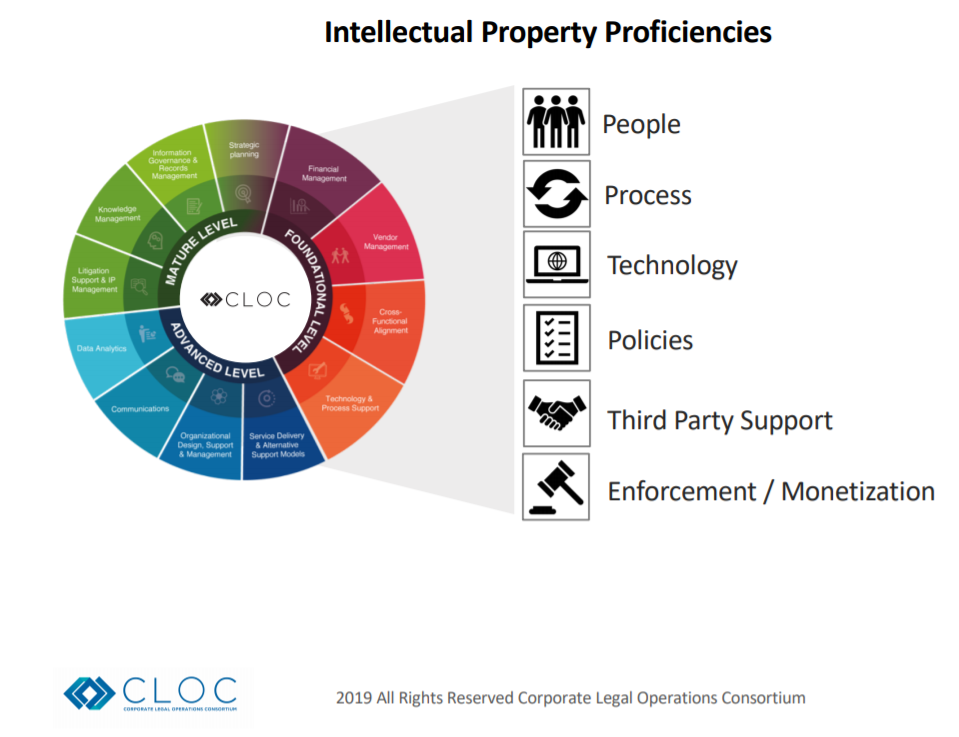
CLOC matrix on corporate IP proficiencies for legal operations departments.
The core team that developed the CLOC IP proficiency standards consisted of a variety of experts from the legal industry, consulting firms and law firms, including thought leaders Jennifer Karr from Microsoft, Brent Harris from Roche, Stephanie Sanders from Kilpatrick Townsend, Sam Wiley from VALUENEX and Adam Jaffe from Duff and Phelps, among others.
Here, we will review the IP Proficiency Matrix for Patents with our overview of three standards related to the process proficiencies section (see pages 5-14). We selected subjects related to cross disciplinary information sharing, data driven decision making, and knowledge management — we also included subjective feedback based on our 15+ years of experience with in-house IP departments, noting how IP Checkups services or software align with each of the standards.
Analytics
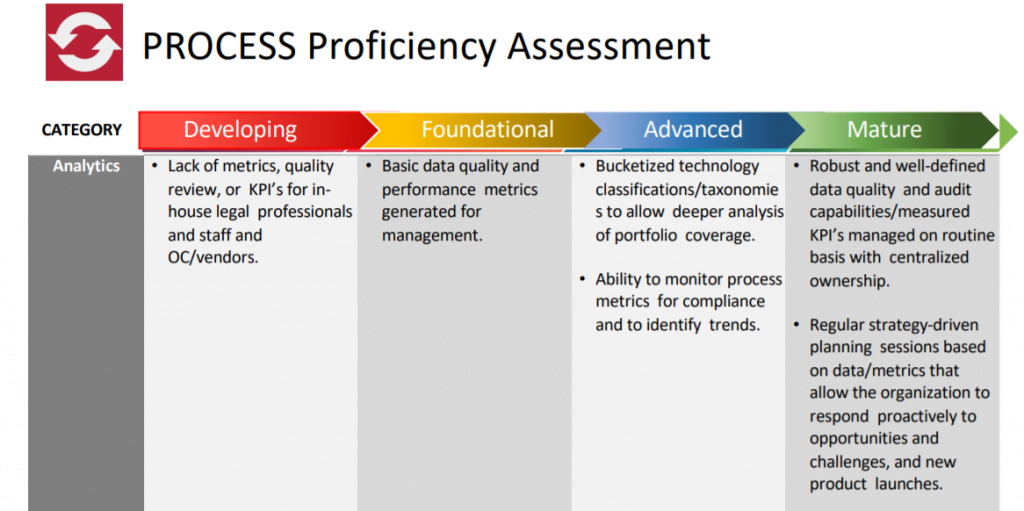
IP Proficiency Matrix for Analytics
For the Developing and Foundational assessments, we have found that most in-house IP departments operating for more than 5 years, have some level of metrics they use to evaluate the quality of their own department, outside counsel and other vendors. It may be adhoc, but quality metrics are critical to establishing consistency within an organization. In addition, most of these companies either have developed, or are in the process of developing performance metrics that can be shared with management.
As for the Advanced assessment category, although it is common for organizations to have some level of bucketed technology taxonomies, it is rare to see companies with well thought out and deep categorization hierarchies (see example below). Although many companies have the resources and capability to develop more in-depth hierarchies, monitor metrics and identify industry trends, it’s uncommon to see substantial and repeatable programs in place.
Here are two category hierarchy examples from IP Checkups’ PatentCAM software. The two hierarchies, one for Dow Chemical and the other for BASF reflect the patents within the two companies portfolios that are relevant to the product areas in which each companies’ patents relate.
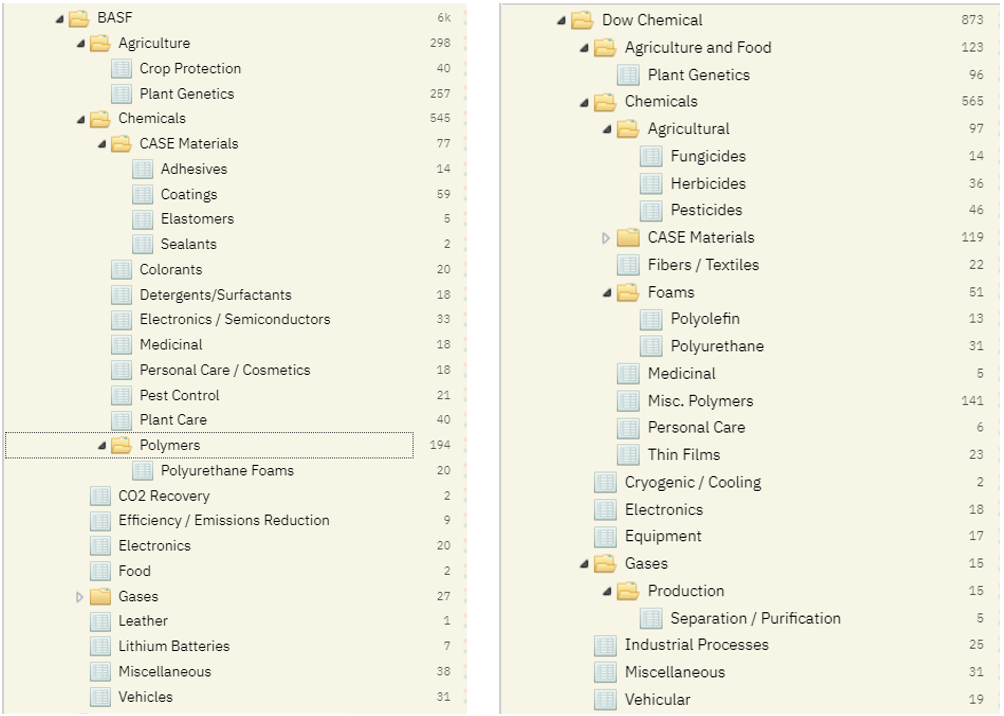
Exemplary product categorization hierarchies for Dow Chemical and BASF.
Although many companies have the resources and capability to develop more in-depth hierarchies, monitor metrics and identify industry trends, it is uncommon to see any substantial and repeatable programs in place.
Finally, the definitions associated with in-house IP departments operating in the Mature phase, appear to be in line with IP Checkups recommended best practices. The more that companies can encourage cross disciplinary thought leaders to discuss strategy based on measurable data and metrics from each department i.e. (R&D, business development, and legal) the more the organization will benefit. This includes for example, being prepared “to respond proactively to opportunities and challenges [as they occur] and new product launches.”
Asset Management
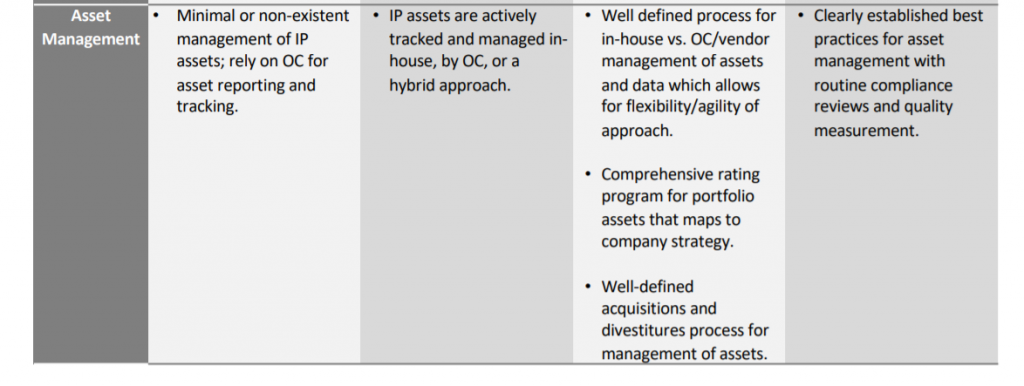
IP Proficiency Matrix for Asset Management
For the Asset Management category’s Developing stage, we often see in-house counsel relying on outside counsel to manage the IP assets of a company, particularly for companies with less than 3 in-house IP practitioners. The amount of reporting or tracking performed by outside counsel is minimal. Often, this is because the cost of performing these tasks is exorbitant and in-house counsel has higher priorities. By simply integrating IP tracking, analytics and patent management software tools within the firm, outside counsel would create significant advantages for clients over other firms that don’t offer those services and greatly improve their value proposition.
The features outlined in the Advanced section of the Asset Management category align closely with IP Checkups core service offerings. Through our patent landscape services and supporting PatentCAM software, IP Checkups routinely delivers reports that map IP to products, markets and previously filed patents (to avoid duplicative research). We often recommend developing a customized ranking system, and we promote data capture of inventor and attorney feedback related to the innovations your teams are working on. This is critical for assessing the strengths and weaknesses of your own portfolio and establishes a quantitative, yet qualified process for considering acquisition or divestiture of IP assets.
Knowledge Management

IP Proficiency Matrix for Knowledge Management
In one example, we led a patent landscape and market analysis to advise our client on how to move forward with a new product initiative. Our client’s marketing team gathered optimal technology and characteristics of successful products in the market. The R&D team researched specific ranges and qualities required to achieve success. The business development teams researched competitor technology and monitored potential start-ups to acquire. And the legal team assessed the strengths of the competitor IP portfolios. This cross disciplinary team worked together with our expert analysts to determine the following:The knowledge management category is an area where most of our customers can improve significantly. A lack of process, software and policy results in inconsistency and sharing across departments, redundant research, missed opportunities, and increased risk. Our PatentCAM interface provides a centralized repository, encouraging cross disciplinary input and balances the needs of attorneys to reduce risk while enabling researchers and engineers to safely explore technology frontiers.
- What were the technical requirements necessary to avoid the prior art and limit freedom to operate risks?
- Did it make more sense to acquire a competitor, build the product from scratch or some combination?
- How likely was it that the product would be novel? Would there be infringers? If so, who and could the client generate or purchase IP to maintain or improve leverage with the other IP holders in the space.
Establishing a knowledge management process and deploying software to capture the results of our cross-disciplinary efforts saved our clients vast amounts of time and money. The process and resulting centralized repository reduced risks associated with litigation, accelerated time to commercialization and provided more revenue opportunities.
There are many more standards described in the CLOC IP Proficiency Matrix. IP Checkups is encouraged by CLOC’s efforts to attack this gap in the market – establishing best practices and standards related to process efficiencies that help corporate IP departments provide more value to the enterprise. Overall, this is a positive step to improving the value, we as IP practitioners bring to our respective organizations.
Interested in patent landscape analysis or patent management software? Contact us.
The post Corporate Legal Operations – Implementing IP best practices to drive your organization appeared first on IP Checkups | Patent Categorization Software.
]]>